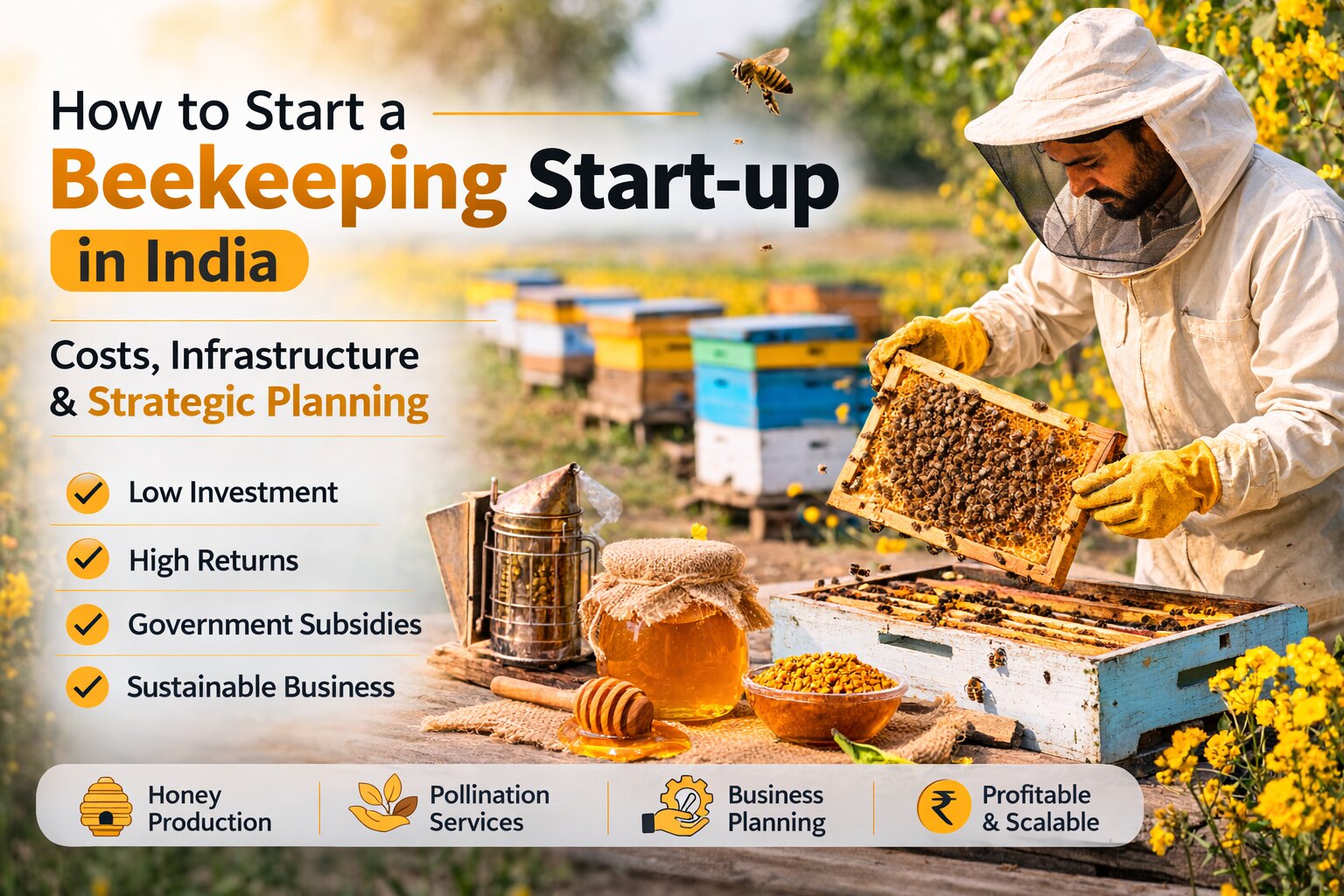
Beekeeping Start-up in India: Cost, Infrastructure & Business Planning Guide
Beekeeping startups in India leverage the country's vast floral diversity and $200 million honey market (APEDA, 2023). This article analyzes costs (₹1–5 lakhs for 10–50 hives), infrastructure needs, and planning for small-scale apiculture. Drawing from NABARD data and ICAR studies, initial setups yield profitability in 1–2 years via honey (₹200–400/kg), pollination, and by-products. Emphasis on soil-healthy sites enhances sustainability.
India ranks second globally in honey production (1.2 lakh tonnes, 2022–23; NHB, 2023), driven by demand for organic sweeteners and exports (₹800 crore, APEDA). Startups can begin with 10 hives, scaling via pollination services (₹2,000–5,000/hive/season) amid pollinator decline threats to 35% of crops (ICAR, 2023). This paper details India-specific costs, infrastructure, and planning for viable ventures.
Beekeeping, or apiculture, is an age-old practice that contributes significantly to agriculture through pollination and honey production. In India, the sector has seen renewed interest due to increasing awareness of sustainable agriculture and organic products. Establishing a beekeeping startup involves understanding the financial commitments, infrastructure needs, and strategic decisions that underpin a successful operation. India ranks second globally in honey production (1.2 lakh MT, 2022–23; NHB, 2023), yet per capita consumption lags at 0.2 kg vs. global 1 kg. Startups can tap ₹2,000 crore market (FICCI, 2023) through Apis cerana/mellifera hives, serving organics, exports, and pollination for ₹10,000 crore horticulture sector. This paper draws from Indian contexts (e.g., Madhya Pradesh's sunflower fields) for viable models.
for details please check the attachment below.....